
The Man Who Said Yes to a Weekend Job

Daniel Morin with the Canadian RV Dealer of the Year award.
Every dealership has a founding story. Few begin with a man who just wanted to go fishing.
In 1968, Roland Desjardins ran a small shop in Lafontaine, Quebec, selling chainsaws, lawnmowers and garden equipment. He also sold rowboats and motors, because he loved to fish. Somewhere along the way he added a few fold-down camping trailers, a natural fit for a man who liked to be outdoors.
There was just one catch: the trailers were new to the shop, and Roland was the only one who knew the specifications and pricing. Whenever he slipped away, no one else in the shop could answer a customer’s questions. By Daniel Morin’s account, Roland’s own son made sure his father heard all about the missed opportunities and frustrated walk-ins.
Enter his son-in-law, Daniel.
At the time, Daniel was working for General Motors’ heavy-duty truck division. To help keep things running smoothly and give Roland some breathing room, Daniel started coming in on weekends. “I went and gave him a hand on the weekends so he could go fishing,” Daniel remembers. Then one day, Roland made him a sudden, direct proposition: “If you want the business, it’s yours.”
“He found that he didn’t have enough leisure time for himself,” Daniel says. “So, he offered it to me, and we jumped in, and took it from there.”
The “we” was Daniel and his wife, Thérèse. In 1970, they bought the RV side of the business. They started with two employees, a one-bay service shop and an industrial mobile home that served as their office for about ten years. That yellow trailer sat on a gravel lot beside a sign reading Vente de roulottes usagées. Looking at that dusty yard in the early 1970s, nobody could have predicted what it would eventually grow into.

The original yellow mobile-home sales office and a separate service building, 1970s–80s.
Twenty units a year

Daniel and Thérèse Morin.
In those early years, the dealership sold around twenty units a year. They sold Quebec-built trailers, with names like Bonheur, Bellevue and Champlain. Sales eventually reached 250 to 275 units a year. Those Quebec brands are all gone now, and Daniel remembers exactly why.
In 1976, American manufacturer Fleetwood opened a plant in Lindsay, Ontario, and the price gap was brutal. “I always remember, I was quoting a Canadian product, 31 feet,” Daniel says. “The pricing was like $10,000, and the product from Fleetwood was $7,000.” The Canadian manufacturers couldn’t close that gap, and within a couple of years they all disappeared.
Daniel didn’t wait to find out what would happen. Recognizing that customer loyalty could not overcome economic reality, Roulottes Desjardins moved swiftly to secure inventory from Fleetwood, taking on Prowler and Mallard, and later broadening their lineup with Dutchmen and Coleman. “We were lucky enough to take on the lines,” he reflects modestly. “So, we had the right products.”
One brand, and the credibility that came with it
In 1992, Roulottes Desjardins added Jayco. Over time, Daniel made a decision many dealers find difficult: to commit to one brand.
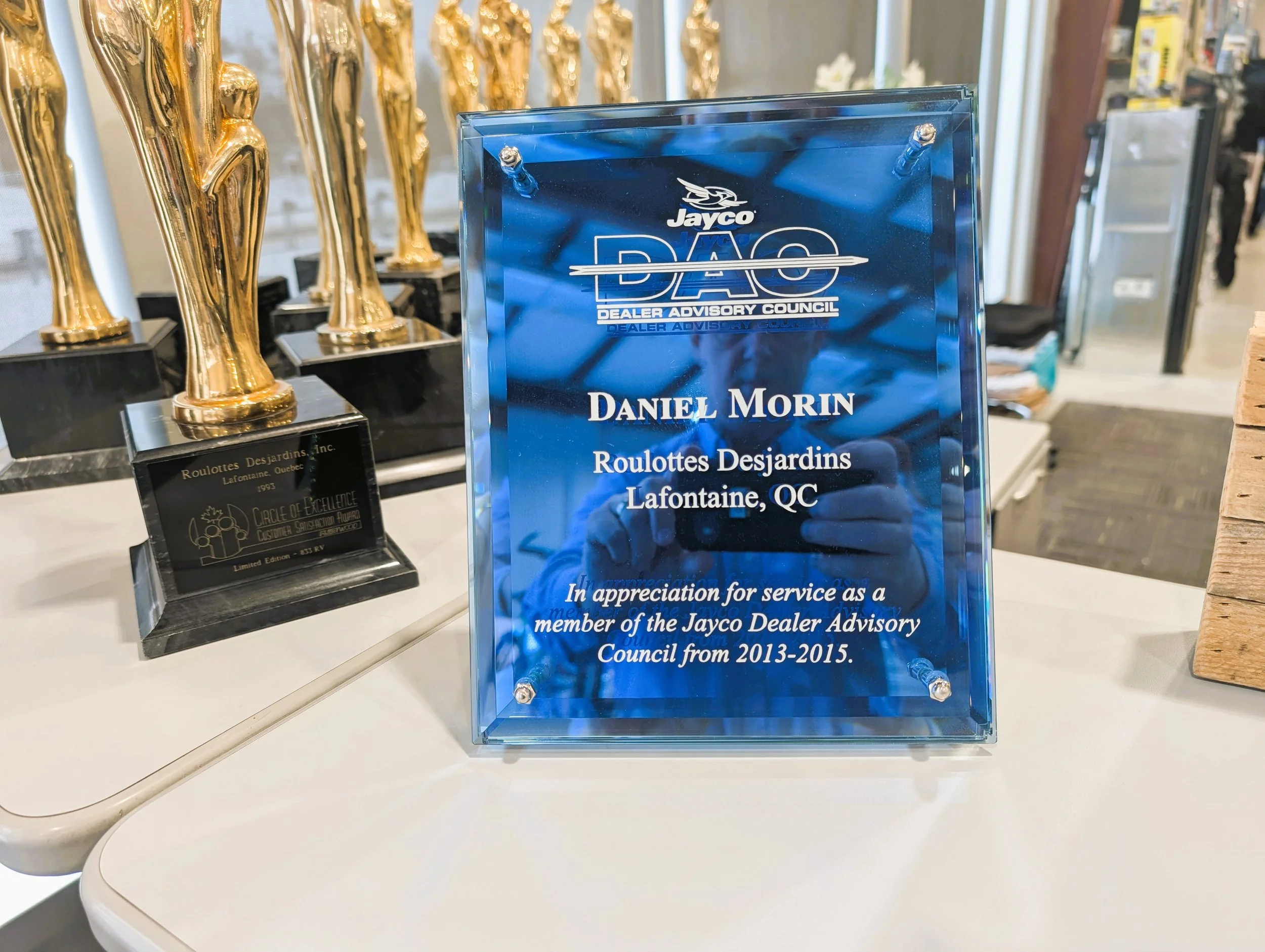
Daniel’s plaque from the Jayco Dealer Advisory Council, 2013–2015.
His reasoning is practical and a little funny. When a family walks into a dealership with three similar lines from competing manufacturers, he says, the sale can come down to something small. “It’s hard to say to a customer, no, no, this one is better, take it. Because his wife might prefer the colour of the other one.”
But the deeper reason was trust. Some dealers, Daniel notes, change brands every year. “Imagine last year when he told the customer, oh, this is the best trailer in the market. Now, 360 days later, he’s got a better one.” Staying with one manufacturer, Daniel says, “gives you credibility, because then you can tell the customer it’s the best product and that’s why you’ve been with them for so long.”
The relationship runs both ways. Daniel speaks warmly of Jayco’s founding family, and of the training Jayco provides for sales, technicians, parts and service staff. “We’re fortunate with Jayco,” he says. He served on the Jayco Dealer Advisory Council from 2013 to 2015.
A family business, in the real sense
By 1990 the dealership had outgrown the mobile office. It moved into a new 12,000-square-foot building on 200,000 square feet of land in Lafontaine. In the old aerial photo, trailers are packed onto a lot hemmed in by neighbourhood houses. Today’s property sprawls along the highway in Saint-Jérôme.
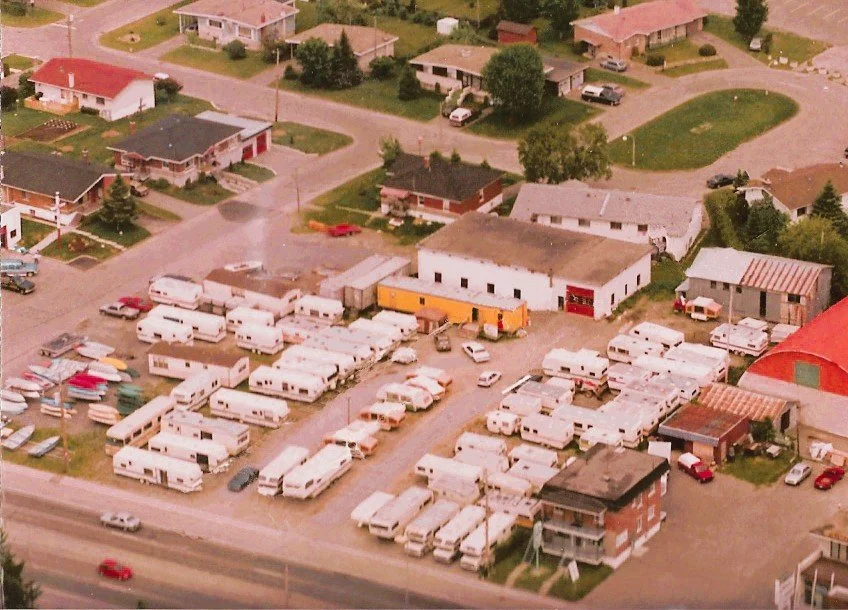
The dealership in the 1970s–80s.
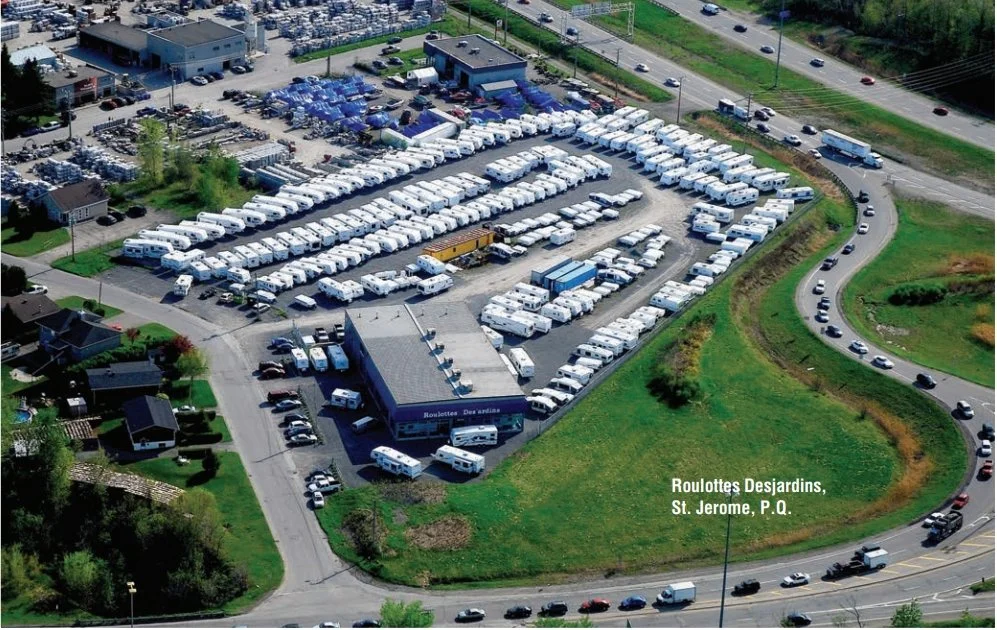
Roulottes Desjardins, Saint-Jérôme, today.
Daniel’s children grew up in the business. His daughter, Sylvie, remembers working summers and weekends as a student. She helped her grandmother receive parts orders. When her parents were too busy to show customers around, they handed her the master key. “I was learning by watching,” she says.
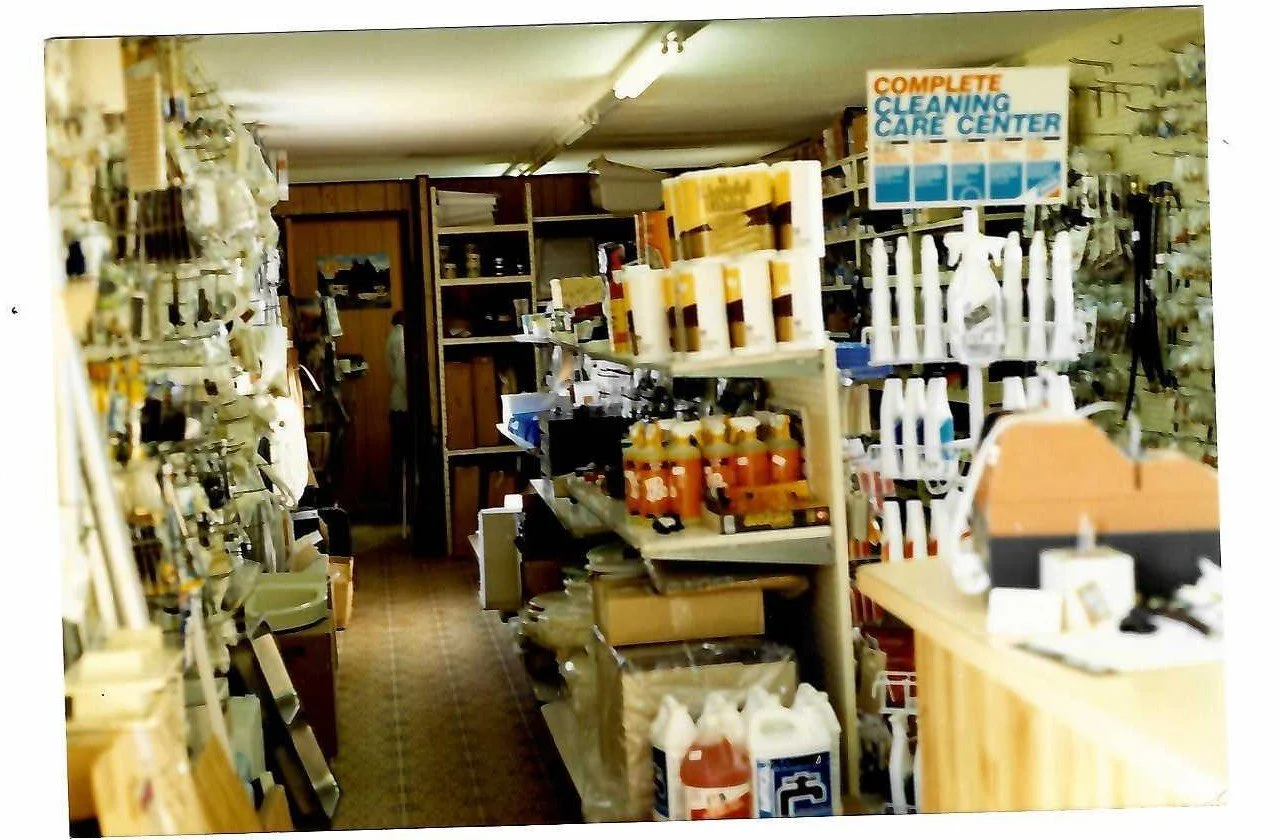
The parts department, then.
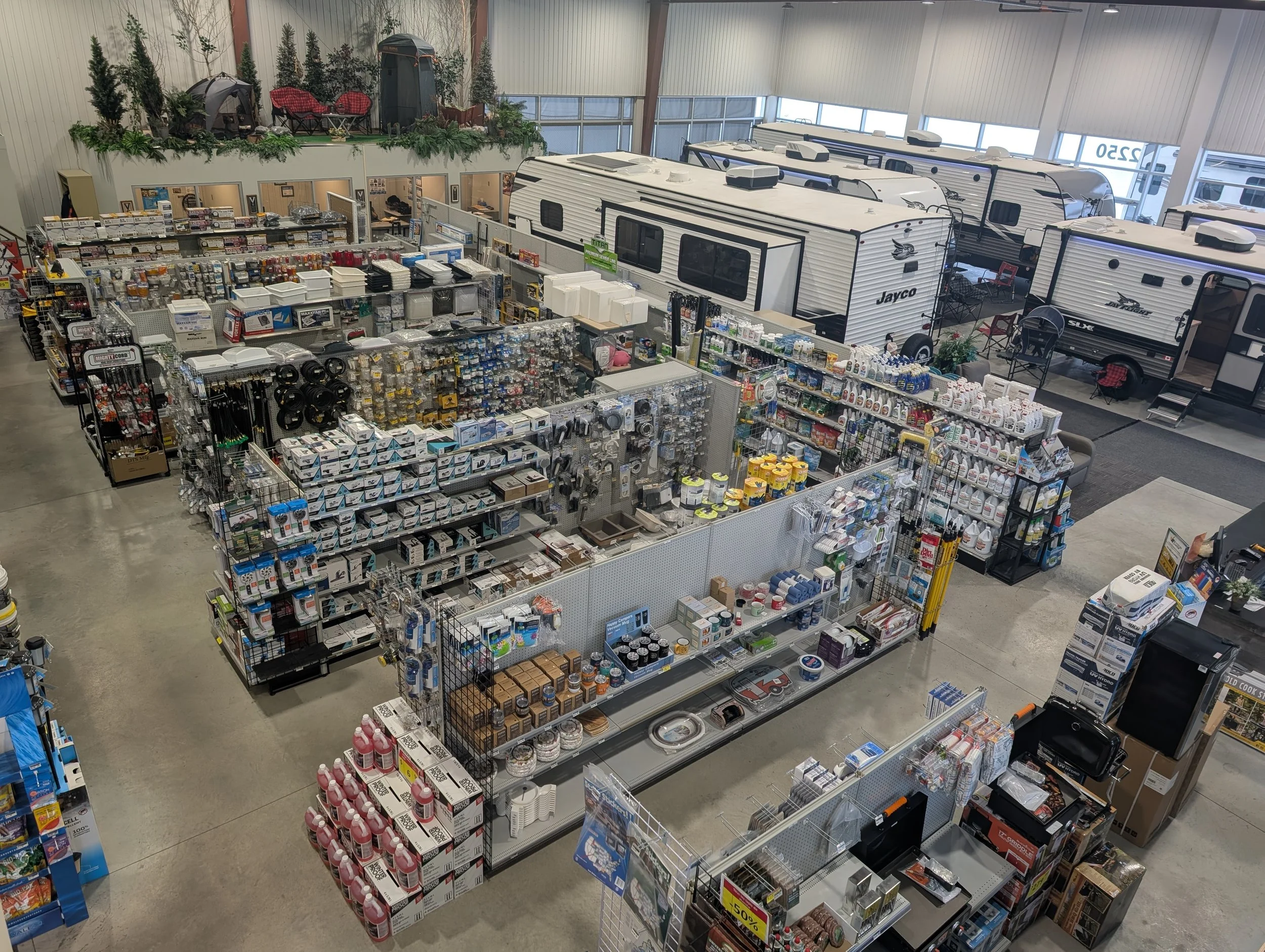
The parts and accessories department, today.
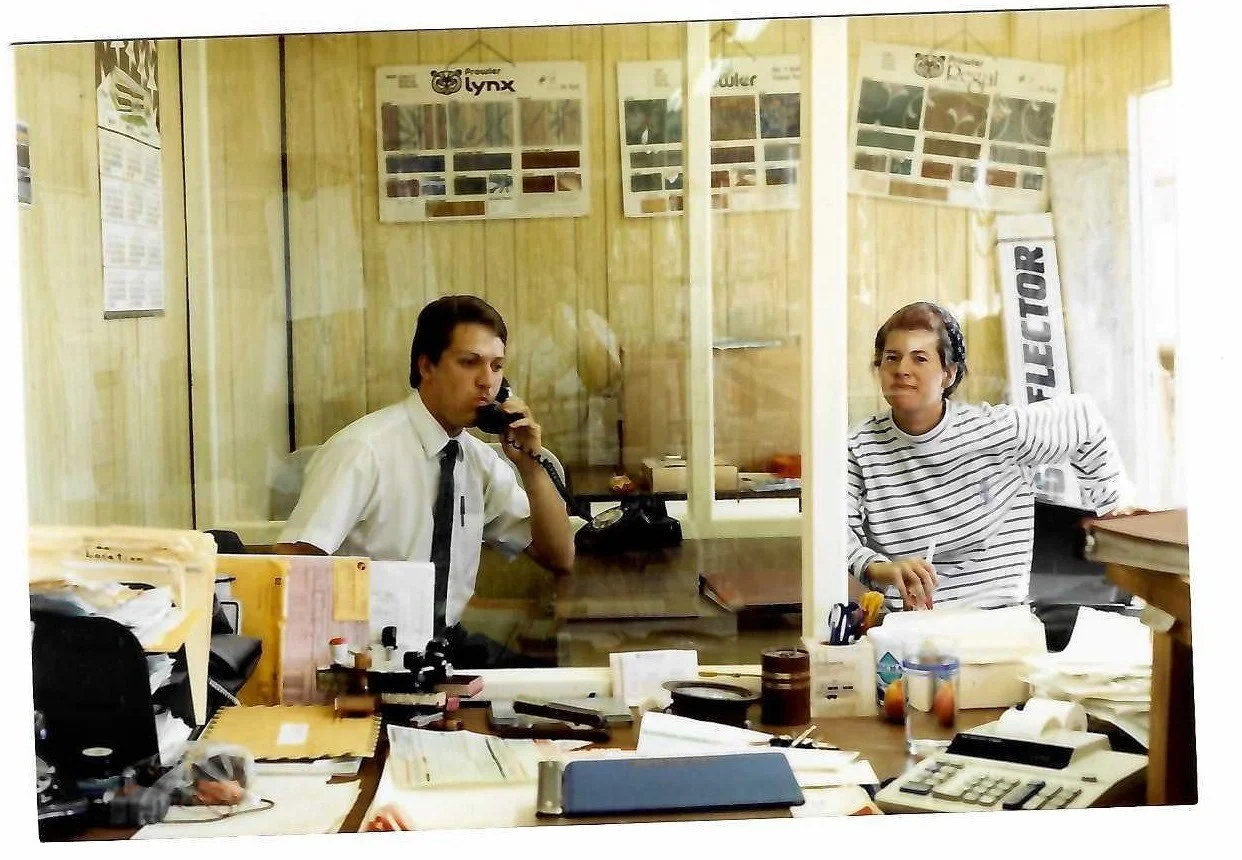
Sylvie Morin and salesperson Alain in the original sales office, 1980s.
The wood-panelled sales office was another practical classroom. Sitting alongside veteran salesman Alain, she absorbed the fundamentals of salesmanship amid Prowler and Lynx fabric swatches and desks stacked with paperwork.
After earning her business degree in 1993, Sylvie worked two years full time at the dealership. Her parents then gave her the opportunity to open a second store in Quebec City. Her brother, John, joined the business as well. At its peak, two stores employed 37 or 38 people.
Asked whether she ever imagined running the place, Sylvie says yes. Her studies were aimed at exactly that.
Thérèse was there from the beginning, and the Morin family remains at the heart of the dealership. Daniel says plainly that the succession plan is in motion: the business is passing to Sylvie and John. “My daughter is running the place with her brother, and it’s going very well.
Talking to the competitor down the street
The business is in good hands, but Daniel’s story was never only about his own lot in Lafontaine. Somewhere along the way, he started looking past his fence line to the dealers down the road and across the country.
In 1988, he helped found the Association des commerçants de véhicules récréatifs du Québec and became its president. By 1992 and 1993, he was serving as president of the RVDA of Canada. Back then, dealers often weren’t even speaking to the competitor down the street, leaving everyone guessing. “A dealer says, I sold X number of units, but that doesn’t mean anything,” he says. “Maybe you’re doing poorly compared to your neighbour.”
Then dealers began sitting down together. “Once they sat down at night, during the meetings, these guys started to talk to each other, and it was much easier after that. You learn by talking to your fellow dealer. Sometimes you’re doing something right, and sometimes your competitor is much better at doing it.”
As national president, he travelled across the country making friends—connections that proved invaluable when a customer ran into trouble far from home. If a customer’s unit broke down in Alberta, Daniel could simply call a dealer he knew from the association table.
“It’s easier talking to somebody that you have met before. It’s all a question of relationship.”
He also focused on the shop floor. “When we started, there was nothing like that,” he says of dealer training. The association pressed manufacturers for training budgets, while profits from the Montreal RV show funded administrative and technician education.
In 2010, Daniel was named Canadian RV Dealer of the Year. Closer to home, the dealership has lent trailers to local sports organizations as event offices since 2000, and Daniel championed French translations of manufacturer brochures for Quebec customers. Since 2016, the business has also supported Maison Pallia-Vie, which provides end-of-life care in the community.
Winters in Florida
When asked about retirement, Daniel laughs. “You are going fishing?” the interviewer teases. He and Thérèse have been snowbirds for years, wintering in West Palm Beach. Years ago, they hauled a trailer down there, and sometimes the drive south doubled as a delivery run.
Was any of it the plan? “No, not really,” Daniel says. “It happened.” And so a man who started out covering weekends so his father-in-law could go fishing now spends his winters in Florida, trailer parked, business in his children’s hands.